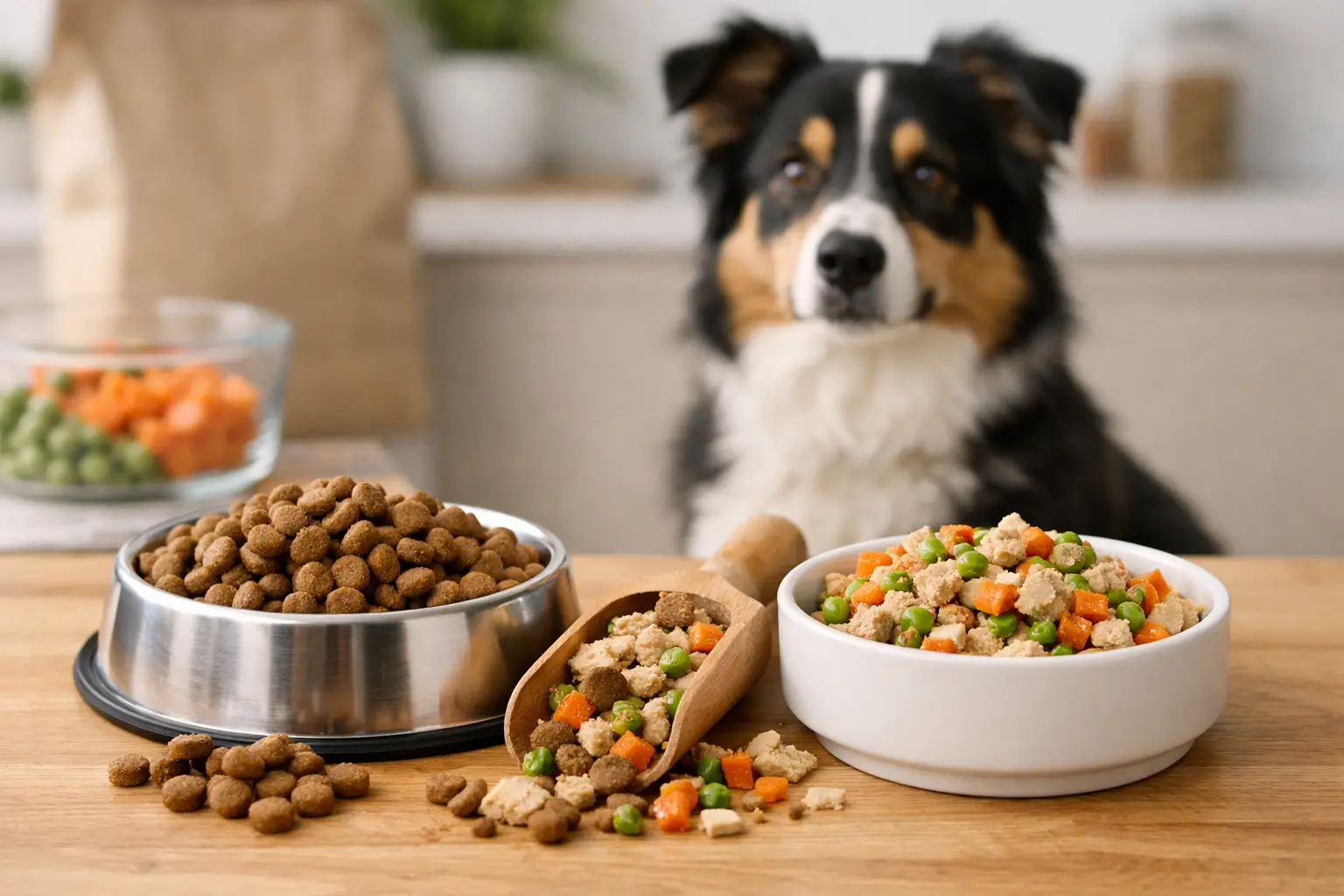
You have a new bag of dog food sitting in the kitchen. Maybe you spent an hour comparing ingredient lists, reading reviews, and trying to find something that seems gentler on your dog’s stomach.
Then breakfast arrives, and the next step looks almost too simple: put the new food in the bowl.
Some dogs barely notice the change. With a sensitive stomach, though, a quick swap can mean soft stool by the next trip outside, extra gas that evening, or vomiting before you have had a fair chance to judge the new food.
Changing foods slowly gives the digestive system time to adjust and gives you a cleaner view of what happens next. If the stool changes, you can ask when it started and how quickly you increased the new food instead of blaming the whole bag on sight.
This guide shows you how to switch dog food gradually, what to watch at each stage, and when to slow down instead of pushing ahead simply because a chart says it is “Day 5.”
Why Can Changing Dog Food Upset a Sensitive Stomach?
Two bowls of kibble can look nearly identical on the kitchen floor. To the digestive tract, they may be quite different.
The protein source may be different. So may the fat level, fiber blend, calorie density, or several of these at once. Even when both foods are complete and balanced, the nutritional mix has changed.
If your dog already tends to develop loose stool, gas, or occasional vomiting, the change may be harder to miss.
The New Food Is Not the Only Variable
Imagine replacing your dog’s old food on Monday morning. By Tuesday, the stool is softer.
The new bag immediately looks guilty.
But how much new food went into the bowl? Was it a complete swap? Did new treats appear over the weekend, or did someone slip table scraps under the table at dinner?
That timing can make a digestive reaction surprisingly hard to interpret.
This is especially important if you are still trying to understand your dog’s usual digestive symptoms. Our guide to signs of a sensitive stomach in dogs explains the stool, vomiting, appetite, and discomfort changes worth tracking over time.
During a food transition, keep the rest of the diet as boring and consistent as reasonably possible. The fewer things you change at once, the easier it is to understand what your dog’s stomach is telling you.
A Bad Transition Does Not Always Mean a Bad Food
One soft stool after an increase is a clue, not a verdict on the diet.
Open another bag that evening and you have introduced another change. After a few quick switches, it can become hard to tell whether any one food was ever given a fair chance.
If you are still deciding what diet to try, start with our guide to the best dog food for sensitive stomachs before beginning the transition.
Once you have chosen a food, start with a small proportion and increase it only when your dog is doing well at the current step.
How Slowly Should You Switch Dog Food?
Seven to 10 days is a common starting range for a gradual food change. Your dog does not know the schedule, and the stomach certainly does not have a calendar.
Replace a small portion of the old food with the new food, then gradually increase it. If your dog keeps eating normally and digestive changes remain mild or absent, move to the next step.
Some dogs finish in about a week. A more reactive stomach may need 10 days, two weeks, or occasionally longer.
A 7-Day Transition Is a Starting Point, Not a Rule
Transition schedules give you structure. The problem begins when the schedule becomes more important than the dog.
Suppose you reach a 50/50 mix at breakfast. That evening, the stool is noticeably softer.
Instead of moving to 75% the next morning, hold the bowl at 50/50 for another day and watch. If the stool starts moving back toward normal and nothing else is concerning, you may be able to continue at a slower pace.
What matters is the direction things are moving, not whether you reached 75% new food on the “correct” day.
When a Sensitive-Stomach Dog May Need More Time
If previous food changes have repeatedly ended in loose stool, build in more time from the beginning. The same applies to dogs that seem especially reactive to changes in fat, fiber, or protein sources.
A larger nutritional difference may also justify more time. Foods with noticeably different calorie densities or feeding amounts can create a bigger practical change than the bags suggest.
Repeated vomiting, persistent diarrhea, refusal to eat, significant lethargy, blood in the stool, or signs of pain are not reasons to keep adjusting percentages at home. Those changes deserve veterinary guidance.
For an otherwise bright, comfortable dog with only mild changes, slowing down may be enough.
A Step-by-Step Dog Food Transition Schedule
For many dogs, a 25% → 50% → 75% → 100% progression is a reasonable starting framework. The percentages refer to the share of the daily diet coming from the new food.
On paper, a simple seven-day starting schedule looks like this:
| Days | Old Food | New Food |
| Days 1–2 | 75% | 25% |
| Days 3–4 | 50% | 50% |
| Days 5–6 | 25% | 75% |
| Day 7+ | 0% | 100% |
With a sensitive stomach, each row is a stage, not a deadline. Move on when the current mix is going well.
Days 1–2: Start With a Small Amount of the New Food
At the first meal, most of the bowl should still look familiar: roughly 75% old food and 25% new.
This first stage is your chance to see how the digestive system responds to a relatively small amount of the new food.
Watch the stool, appetite, gas, vomiting, and any obvious abdominal discomfort.
If everything stays close to normal for your dog, you can usually move to the next stage.
If the stool becomes slightly softer but your dog is still eating, drinking, and acting normally, hold this ratio for another day before increasing the new food.
Days 3–4: Increase Only If Your Dog Is Tolerating the Change
The next stage is approximately 50% old food and 50% new food.
At 50/50, the new food is no longer a small addition. Changes that were easy to miss during the first two days may become more obvious.
Keep treats, chews, table scraps, and toppers consistent. A new dental chew on the day you reach 50/50 makes a soft stool much harder to explain.
If symptoms are clearly getting worse, do not move to 75% new food the next morning just because the schedule says so.
Days 5–6: Move Toward Mostly New Food
If the 50/50 stage has been uneventful, turn the bowl around: approximately 25% old food and 75% new.
One bowel movement may be softer than another. Watch for symptoms becoming more frequent, more severe, or accompanied by vomiting or reduced appetite.
Check the new food’s feeding directions too. Calories per cup can differ, so replacing one cup of old kibble with one cup of new kibble is not always an equal exchange.
Day 7 and Beyond: Complete the Switch When the Pattern Is Stable
Once your dog is comfortable with mostly new food, you can move to 100%.
A good stool is encouraging, but it is not the moment to celebrate with three new treats and a topper at dinner. Give the new food some quiet time in the bowl.
If your dog needed extra days at an earlier ratio, that is fine. The whole switch may take 10 or 14 days instead of seven.
The goal is to reach the new diet without creating so much digestive noise that you lose track of how your dog is actually doing.
What Should You Watch During the Food Transition?
You do not need to follow your dog into the yard with a clipboard.
During a food change, a few observations can tell you whether to continue, hold the current ratio, or get veterinary advice.
Start with what is normal for your dog. One dog may routinely have slightly soft stool; another suddenly asking to go outside three times in an afternoon is telling you something has changed.
Stool Changes
Watch for shifts in consistency, frequency, and urgency. Slightly softer stool may be temporary; repeated watery diarrhea or a rapidly worsening pattern is more concerning.
If stool softens after you increase the new food, note when it happened. Holding the current ratio may tell you more than increasing the new food again the next day.
Vomiting and Regurgitation
Vomiting and regurgitation are not the same, although the terms are often used interchangeably.
Vomiting usually involves active abdominal effort. Regurgitation is more passive, with food or fluid often coming back up soon after eating.
A single episode does not always identify the new diet as the cause. Repeated vomiting, inability to keep food or water down, lethargy, or pain should not be managed simply by changing the food ratio.
Appetite and Willingness to Eat
Some dogs hesitate because the new food smells or tastes different. That alone is not necessarily a digestive problem.
Do not keep increasing the new food while your dog eats less and less, especially if poor appetite comes with vomiting, diarrhea, or lower energy.
Gas, Discomfort, and Changes in Behavior
A little extra gas may appear during a diet change. What matters is whether it is temporary or part of a larger change.
Watch for restlessness, repeated stretching, a tense abdomen, unusual postures, trouble settling, or obvious discomfort when the belly is touched.
If your normally food-focused dog walks away from dinner and spends the evening unusually quiet, that matters even if the stool still looks normal.
A note in your phone is enough. Jot down the food ratio, stool quality, any vomiting, and whether your dog wanted dinner.
The point is to avoid relying on memory four days later and wondering, “Was the stool already soft before we moved to 50/50?”
What Should You Do If Your Dog Gets Diarrhea During the Switch?
You increase the new food at breakfast. A few hours later, you are standing in the yard looking at a soft stool and wondering whether to keep going.
This is where many food transitions get messy—and not only in the yard.
The temptation usually goes in one of two directions: keep following the chart, or throw out the bag and open something else that evening.
Mild Changes May Mean You Need to Hold the Current Ratio
If the stool is only mildly softer and your dog is still bright, hungry, drinking, and acting like himself, leave tomorrow’s ratio where it is.
If you recently moved from 25% new food to a 50/50 mix, stay at 50/50 temporarily and observe the next bowel movements.
Then watch the direction of travel. Does the stool move back toward normal for your dog, or does it keep getting worse?
Do Not Keep Increasing the New Food Just to Follow the Calendar
If diarrhea becomes more frequent or looser after you increase the new food, stop advancing the ratio.
Avoid introducing extra variables. New treats, scraps, chews, toppers, and supplements make the situation harder to interpret.
Before blaming breakfast, think about the rest of the day. Greasy food stolen from the trash still counts, even when it happens in the middle of a carefully planned transition.
If you are unsure which everyday foods may complicate an already sensitive digestive system, our guide to foods dogs with sensitive stomachs should avoid covers common troublemakers and why context matters.
When to Stop Troubleshooting at Home
Contact your veterinarian promptly if diarrhea is severe, persistent, or rapidly worsening, or if it comes with repeated vomiting, significant lethargy, obvious pain, refusal to eat or drink, or blood in the stool.
Puppies, senior dogs, and dogs with existing medical conditions may need veterinary attention sooner because dehydration and other complications can become serious more quickly.
A gradual transition can reduce digestive disruption and help you observe the new diet. It is not a substitute for medical care when symptoms are significant.
If your dog is clearly getting worse, the percentages in the bowl stop being the main problem. Contact your veterinarian and focus on finding out why.
Common Mistakes That Make a Food Switch Harder to Read
Sometimes the bowl gets blamed for a week in which almost everything else changed too.
Changing Treats at the Same Time
Change the food on Monday, open new training treats on Wednesday, and hand over a new chew on Friday. By the weekend, one bout of diarrhea has three possible explanations.
Keep familiar treats consistent when possible, or use part of your dog’s measured daily food as training rewards.
Adding Toppers or Supplements Too Quickly
When the stomach seems unsettled, the kitchen counter can quickly fill with pumpkin, broth, digestive powders, and toppers meant to “help.”
If you plan to try probiotics for a dog with a sensitive stomach, avoid starting several digestive products on the same day unless your veterinarian has recommended a specific plan.
Switching Again After One Soft Stool
Look at what happened around the change. Did you just increase the new-food ratio? Was the change mild? Is your dog otherwise acting normally?
Repeated or worsening symptoms deserve attention. One isolated soft stool may simply mean you need to watch a little longer before changing course.
Measuring by Volume Without Considering Calories
The scoop can be misleading too. One cup of the old food and one cup of the new food may not provide the same calories.
If the new diet is more calorie-dense and you feed the same volume, your dog may receive more food than before. Overfeeding can contribute to loose stool and discomfort.
Check the calories and feeding directions on both labels. Think about the total daily ration, not just how full the scoop looks.
A simple switch is easier to read, which is exactly what you need when deciding whether a diet deserves more time.
How Do You Know the New Food Is Working?
A firm stool in the morning and a slightly softer one that evening do not automatically mean the diet has failed.
Look for a Pattern, Not One Perfect Poop
Over time, stools may become easier to pick up, urgent trips outside less frequent, gas less disruptive, or vomiting less common.
Better stool is not much of a digestive success if your dog regularly refuses the bowl or seems uncomfortable after eating.
Think back to why you opened a new bag in the first place. Are the urgent trips outside less frequent? Is the gas less disruptive? Is your dog eating comfortably? Improvement should connect to the problem you were trying to solve.
Give the Diet a Fair Trial Without Ignoring Persistent Problems
Avoid changing foods after one unusual stool or one noisy evening of gas. A short daily note can show whether symptoms are improving or one bad day is dominating your memory.
If diarrhea, vomiting, poor appetite, or discomfort continues, keeps returning, or becomes more severe, a longer transition is not always the answer.
Now the question is whether the diet fits your dog—or whether something beyond a routine food change needs attention.
What If Your Dog Still Cannot Tolerate the New Food?
Sometimes you do everything carefully—the slow ratios, the boring treats, the measured portions—and the digestive problems still return.
Do not stretch a seven-day transition into several weeks while diarrhea, vomiting, poor appetite, or discomfort repeatedly returns. The diet may not be a good fit, or the symptoms may have a cause that food changes alone cannot solve.
Before another bag lands on the kitchen counter, write down what happened: the old food, the new food, how quickly the ratio changed, and which symptoms appeared.
That short history can guide your next decision and give your veterinarian clearer information if an evaluation is needed.
Use what you learned from this transition before choosing the next step.
A Good Food Switch Gives You Clearer Information
The new bag that started this whole process may now be nearly empty.
By now, you should know more than whether your dog finished the bowl. You have seen what happened as the ratio changed, whether the stomach settled, and whether the original digestive problems began to improve.
That is more useful than finishing a transition chart perfectly.
A good transition leaves you with a calmer dog, less guesswork, and a much better answer to the question that mattered from the start: does this food belong in your dog’s bowl?