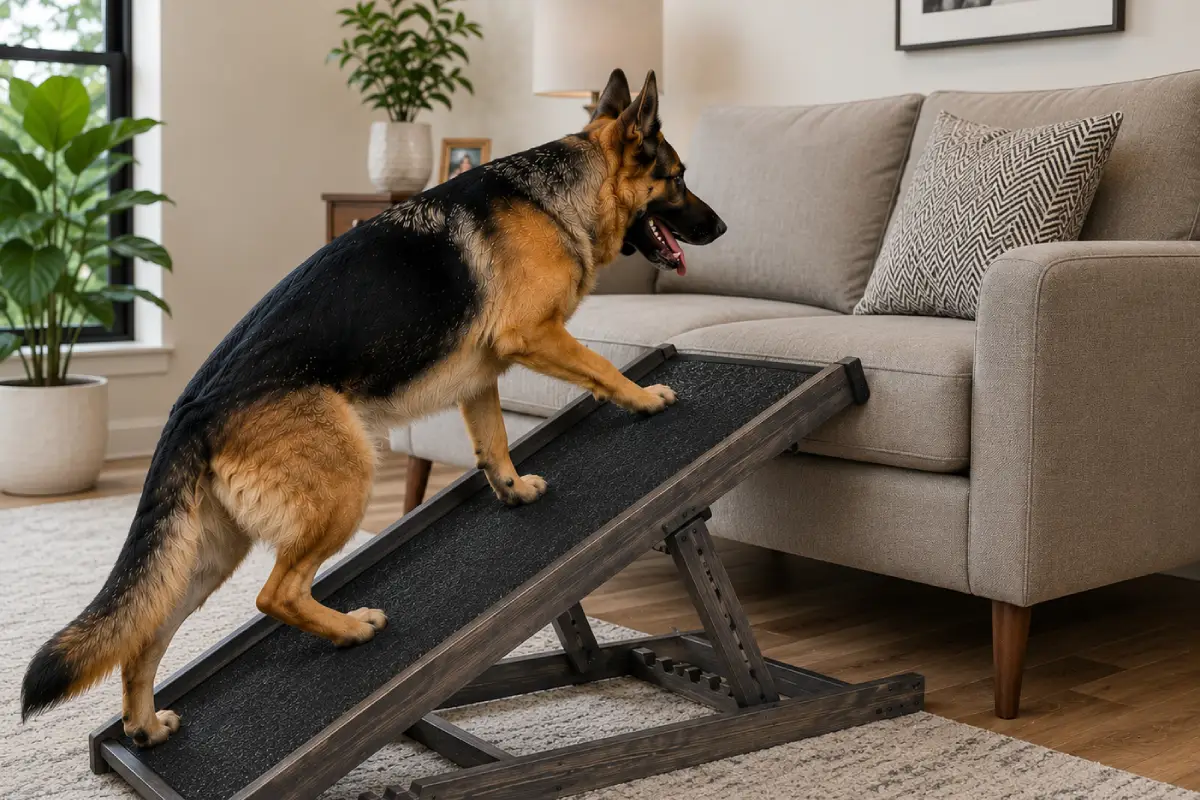
Whether your furry friend is a energetic Corgi, a senior Retriever with arthritis, or a Dachshund prone to IVDD, constant jumping on and off elevated surfaces poses a severe long-term threat to their joint and spinal health.
Every leap off a high bed, sofa, or SUV subjects a dog’s joints to an impact equal to multiple times their body weight. Over time, this repetitive trauma leads to chronic pain, slipped discs, or expensive veterinary surgeries.
A dedicated dog ramp provides a smooth, low-impact slope that completely eliminates the stress of jumping.
In this comprehensive buyer’s guide and mobility index, we break down every type of ramp on the market—covering indoor furniture, vehicles, stairways, water access, and breed-specific needs—to help you choose the perfect, non-slip mobility solution for your home and pet.
Quick Navigation: Mobility Index
| Category | Best Solution For | Top Recommendation / Guide |
| Indoor Furniture | Couches, Sofas, Low Beds | Read: Best Dog Ramps for Couch |
| High Beds & Mattresses | Beds taller than 26 inches | Read: Best Dog Ramps for High Beds & Furniture |
| Vehicle Tailgates | SUVs, Trucks, Trunk Access | Read: Best Dog Ramps for SUV & Trucks |
| Vehicle Backseats | Side Passenger Doors | Read: Best Dog Ramp for Side Door of Car |
| Home Steps & Porches | Indoor & Outdoor Stairways | Read: Best Dog Ramp for Stairs |
| Boats & Swimming | Pools, Docks, Pontoon Boats | Read: Best Dog Ramps for Pontoon Boats & Pools |
| Short-Legged Breeds | Dachshunds, Corgis (IVDD Prevention) | Read: Best Dog Ramps for Corgis |
1. Indoor Mobility: Couches, High Beds & Furniture
Finding an indoor ramp requires balancing functional safety with home aesthetics. A good indoor ramp should feature adjustable height settings, non-slip friction mats, and a frame that complements your living room or bedroom decor.
Low Furniture & Sofas: Standard couches require a short ramp with a gradual incline. If your pet loves lounging in the living room, explore our top-tested picks in the best dog ramps for couch guide.
High Beds & Tall Mattresses: Modern mattresses often sit 26 to 32 inches off the floor. Placing a short ramp next to a tall bed creates a dangerously steep slope. To maintain a safe angle, you need longer, multi-setting inclines. Check out our detailed reviews for best dog ramps for high beds and furniture.
Popular Indoor Brand Showdown: Trying to choose between decorative wooden furniture ramps and heavy-duty plastic workhorses? Read our head-to-head comparison: Alpha Paw vs. Pet Gear dog ramp.
👉 Browse Top Indoor Dog Ramps on Amazon
2. Vehicle & Travel Mobility: SUVs, Cars & Side Doors
Traveling with pets should be stress-free, but lifting a heavy or wet dog into a vehicle can strain your back and intimidate your pet.
SUVs & Trucks (Trunk Entry): Loading big dogs into spacious tailgates requires telescoping or bi-fold ramps with heavy weight limits. Discover the sturdiest models in our review of best dog ramps for SUV and trucks.
Backseat Entry (Side Doors): While rear tailgate access works for most SUVs, loading your dog into the backseat requires a narrower frame that clears the open door angle without scratching car paint. Check out our picks for the best dog ramp for side door of car.
Road Trips & Compact Travel: If trunk space is tight, portable multi-fold ramps fold down into briefcase sizes for easy storage. View our recommendations for the best folding and portable dog ramps for travel.
👉 Browse Top Folding Vehicle Ramps on Amazon
3. Stairways, Outdoor Steps & Water Access
Navigating steps or getting out of deep water can be daunting for senior pets, dogs with hip dysplasia, or short-legged breeds.
Overcoming Stairs: If your home features porch steps, deck tiers, or a split-level entryway, a ramp eliminates joint strain completely. Read our guide on the best dog ramp for stairs.
Weatherproof Outdoor Ramps: Outdoor ramps must withstand UV rays, rain, and freezing temperatures while providing non-slip paw traction. See our top picks for best outdoor and weatherproof dog ramps for porch steps and decks.
Boats, Docks & Pools: If your pet loves water activities, a submerged, high-buoyancy platform is essential to let them climb out safely without clawing at boat ladders. Explore the best dog ramps for pontoon boats & pools.
👉 Browse Outdoor & Water Ramps on Amazon
4. Breed-Specific Considerations & Heavy-Duty Needs
Not all dogs use ramps for the same reason. Small breeds need high-friction traction, while large breeds require rigid structural support.
Short-Legged Breeds (IVDD Prevention): Chondrodystrophic breeds like Dachshunds and Corgis carry elongated spines that are extremely susceptible to Intervertebral Disc Disease (IVDD). Even small leaps off furniture can trigger spinal trauma.
Read our dedicated guide for best dog ramps for Dachshunds.
View our top recommended best dog ramps for Corgis.
Large & Giant Breeds: Heavy breeds like Great Danes, Mastiffs, and German Shepherds require wide decks and structural capacities of 200–500 lbs. Check out our picks for heavy-duty dog ramps for large breeds and seniors.
5. Technical Buying Factors: Slope, Safety & Training
Choosing the right ramp involves more than just picking a size. Pay close attention to these crucial factors before making a purchase:
Ramps vs. Pet Stairs: Which Is Better?
While pet steps are compact, they still require a jarring, stepping motion that puts shock load on knees and hips. Ramps provide a continuous flat incline with zero impact. Read our full comparison on Dog Ramp vs. Dog Stairs.
Calculating the Perfect Incline Angle
A ramp that is too short for a tall bed or vehicle will create a dangerously steep incline that frightens dogs. Learn how to measure height and length ratios in our guide on how steep a dog ramp should be.
Safety Features to Look For
Never compromise on stability. High side rails, rubberized grip feet, and high-friction tread (such as ribbed carpet, rubberized grooves, or artificial turf) are essential. Learn more in our breakdown of essential dog ramp safety features.
Training Anxious or Hesitant Dogs
Many dogs are initially nervous about walking on elevated inclines. Never force a scared pet onto a ramp. Instead, use positive reinforcement and slow exposures. Follow our step-by-step guide on how to train an older or anxious dog to use a ramp.
DIY Option: Building Your Own Custom Ramp
If you have unique furniture dimensions or basic woodworking tools, custom-building a ramp at home can be a rewarding project. Follow our step-by-step tutorial on how to build a DIY dog ramp at home.
Frequently Asked Questions (FAQ)
Are ramps better than stairs for dogs with arthritis?
Yes. Ramps completely eliminate the jarring impact of climbing up or stepping down, making them the superior choice for dogs suffering from arthritis, dysplasia, or spinal conditions.
What is a safe weight limit for a dog ramp?
Always choose a ramp rated for at least 25–50% more than your dog’s actual weight to account for the dynamic force when they walk or trot up the incline.
How long does it take for a dog to get used to a ramp?
With treat motivation and positive reinforcement, most dogs adapt within 3 to 7 days. Older or more anxious pets may take 1 to 2 weeks of patient training.
Complete Topic Cluster Index
Explore our complete library of specialized dog ramp reviews and guides: